zarapiaprils online shopping directory

to all our kababayans, are you looking for a product check our online shopping directory

Sunday, 23 August 2015

Outrage of filipino overseas workers around the globe about there BALIKBAYAN BOXES ( BOC told: Justify plan to inspect balikbayan boxes )

Bureau of Customs (BOC)

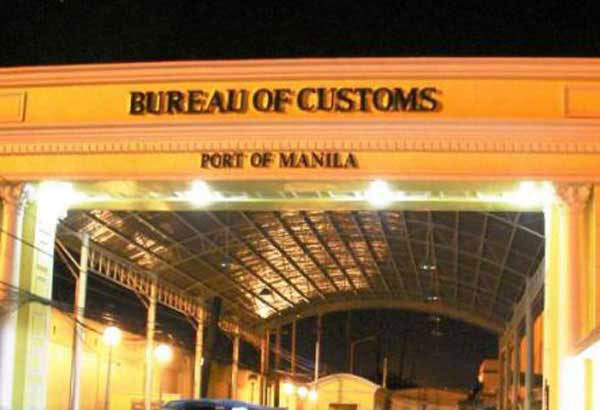
MANILA, Philippines - Sen. Ferdinand Marcos Jr. has joined the public outrage over the plan of the Bureau of Customs (BOC) to conduct random inspections of balikbayan boxes, saying it is a form of harassment of overseas Filipino workers (OFWs).
Marcos said the BOC should justify its plan before the Senate committee on finance during the deliberations on its proposed budget for 2016.
“Let them defend themselves during the budget deliberations. Specifically, I would like to know how many big-time smugglers have they managed to put behind bars during the five years under this administration,” he said.
Marcos noted that the balikbayan box system used by OFWs to send personal effects and other goods to their loved ones in the Philippines started during the administration of his father, the late President Ferdinand Marcos, when Section 105 of the Tariff and Customs Code of the Philippines was amended to provide duty- and tax-free privileges to OFWs.
He condemned the planned random inspections by the BOC of these balikbayan boxes, which was said to be part of the agency’s anti-smuggling campaign.
“For every OFW, a balikbayan box is the equivalent of his or her love letter to a spouse and the rest of the family. Every item inside that box was bought with a specific person and purpose in mind, bought with the hard-earned money of our modern-day heroes. So if a single item there gets lost, can you imagine how that feels to an OFW who invested so much emotion and money just to get those goods home?” Marcos said.
Headlines ( Article MRec ), pagematch: 1, sectionmatch: 1
He said Customs Commissioner Alberto Lina should consult with stakeholders first.
“Commissioner Lina, you are a public servant. It is your duty to consult with stakeholders first before embarking on any draconian measure that would turn their lives upside-down. You seem bent on bullying our OFWs while turning a blind eye on the large-scale smuggling that goes on in nearly all ports across the country,” he said.
Marcos expressed belief that the BOC is undertaking this program in an effort to make up for its revenue collection deficits.
Senate President Pro Tempore Ralph Recto also aired his concern about the plan of the BOC because of the possibility of items contained in balikbayan boxes being lost or stolen during inspection.
Recto said the BOC should install closed-circuit television (CCTV) cameras to monitor the opening of balikbayan boxes.
“Opening of balikbayan boxes should be recorded on CCTV so that if a consignee complains about missing items, the BOC can show proof that no anomaly took place during the inspection,” he said.
Lifestyle check

Vice President Jejomar Binay called for the conduct of a lifestyle check on BOC personnel as he criticized the agency’s plan to impose higher duties and taxes on balikbayan boxes.
A former presidential adviser for OFW concerns, Binay said the BOC should train its eyes on big-time smugglers conniving with its personnel if it really wants to address the problem of smuggling.
“They should start with the BOC personnel who close their eyes whenever there are shipping containers containing smuggled items that pass in front of them,” he said.
“They should start a lifestyle check on BOC personnel to know who owns huge houses and expensive vehicles despite their meager salary,” he added.
The Vice President described the BOC plan as another reflection of the administration’s insensitivity and callousness toward the people.
“Instead of expressing gratitude to OFWs who support our economy, they would impose stricter rules on the little things that they could provide for their families,” he said.
Binay scoffed at the reasoning of the BOC that balikbayan boxes are being used by groups to smuggle expensive items into the country.
He urged the administration not to pass on to OFWs its failure to collect taxes and curb smuggling activities.
For his part, Buhay party-list Rep. Lito Atienza urged Lina to withdraw his order to inspect balikbayan boxes as it will affect families of OFWs and promote corruption.
Atienza said Lina should not deprive OFWs and their families of the “simple joys of some goodies in their balikbayan boxes.”
“We owe our hardworking and productive countrymen a lot of gratitude for their taxes and remittances that are keeping the Philippine economy afloat. They should be accorded privileges and support – not the usual Customs harassment and razzle-dazzle,” he said.
“Surely the new Lina doctrine on opening up OFWs’ balikbayan boxes sent to their families is no way to treat them, considering that we refer to them as our modern-day heroes,” he said.
“I cannot support this intrusion into the hard-earned income of our OFWs. Stop this before it gets out of hand,” he added. – Janvic Mateo, Paolo Romero

Customs chief responds to OFW’s plea not open balikbayan boxes

MANILA, Philippines – The Bureau of Customs (BOC) reacted to the Overseas Filipino Workers’ (OFW’s) petition to stop opening the balikbayan boxes or packages they are sending to the country.
BOC Chief Bert Lina said OFWs should not be worried if their agency is opening the boxes being brought to the country if they have nothing to hide. He reiterated that the random inspection is only part of the process to reinforce the drive to stop smuggling.
“Kung hindi prohibited bakit ka matatakot? Kung iyan ay hindi dutiable, bakit ka matatakot?" Lina said in an interview with DZMM.
Lina stressed that he is only fulfilling his duties and implementing the law through strict inspection of balikbayan boxes that could help in protecting the country from smuggled goods such as illegal drugs and unlicensed firearms.
“I have my duty to protect this country... Kung dumami ang droga dito, dumami ang mga baril, sisihin mo ako, 'di ba? 'Yun ang aking gagawin, I have to implement the law," Lina added.
Through spot check operations, BOC earlier discovered that traders use balikbayan boxes to ship smuggled goods into the country which were identified as “undervalued items” and “undeclared contents.”
Aside from OFWs, solons Sen. Bongbong Marcos and Rep. Lito Atienza also asked the BOC to stop imposing rules on opening of balikbayan boxes as it shows threat to the OFWs.

Canada Express Entry FAQ: Candidates

Express Entry is a new electronic management application system for immigration to Canada. It is not a new immigration program. Rather, it facilitates the selection and processing of Canada’s economic immigration programs: the Federal Skilled Worker Program, the Federal Skilled Trades Program, the Canadian Experience Class, and a portion of the Provincial Nomination ProgramsApplicants make an ‘expression of interest’ in immigrating to Canada and, if they are eligible for at least one of the aforementioned programs, they then enter the Express Entry pool. The federal government and provincial governments, as well as Canadian employers, are then able to select candidates from this pool who will then receive an ‘invitation to apply’ for immigration to Canada under one of the programs. Express Entry moves Canada from a first come, first served (or supply-driven) system to an invitation to apply (or demand-driven) system. Modeled on similar systems in use in Australia and New Zealand, Express Entry aims to fast track the processing of skilled immigrants deemed most likely to succeed in Canada. 

Citizenship and Immigration Canada (CIC) aims to process applications within six months from the date of submission, hence the name Express Entry. Note that this does not mean six months from the date a candidate made an expression of interest in immigrating to Canada, but rather six months from the date he or she submits a complete application for permanent residence after an invitation to apply has been issued. 

Express Entry came into operation on January 1, 2015. 

The Express Entry system applies to the following Canadian economic immigration programs: 
Provinces and territories are also able to recruit candidates from the Express Entry system for a portion of the Provincial Nomination Programs in order to meet local labour market needs. 

No. Express Entry does not change Canadian immigration program requirement. Express Entry is not a new program. Rather, it is a new management and selection system for existing immigration programs. 

Potential candidates make an expression of interest in coming to Canada by creating an Express Entry profile and providing information about their skills, work experience, language ability, education and other personal information. This profile is self-declared; that is to say that the material provided by the potential candidate is based on his or her own assessment of his or her personal information. 

If the information provided by the potential candidate turns out to be false, this is known as misrepresentation and, depending on the nature and severity of the false claim, carries penalties. A potential candidate who has been found to have provided false information going into the Express Entry pool can be banned from re-entering the pool for five years. Therefore, it is hugely important to provide accurate and correct information always. Candidates who are unsure about how to assess their own abilities and credentials may want to seek advice from an immigration lawyer before entering the Express Entry pool. 

Potential candidates who create an Express Entry profile and are eligible for one of Canada’s economic immigration programs enter the Express Entry pool. These programs are: • the Federal Skilled Worker Program, • the Federal Skilled Trades Program, • the Canadian Experience Class, and • a portion of the Provincial Nominee Programs. The federal government and provincial governments, as well as Canadian employers, are able to select candidates from this pool. Candidates who are selected then receive an ‘invitation to apply’ for immigration to Canada under one of the programs. 

No. 

The Comprehensive Ranking System is the government of Canada’s internal mechanism for ranking candidates bases on their human capital, determined by factors such as age, level of education and language ability. This helps to enable Citizenship and Immigration Canada (CIC) to decide which candidates may be issued invitations to apply for permanent residence. There are up to 600 points available under the system for a candidate's core human capital and skills transferabilty factors. An additional 600 points will be given to anyone with a confirmed job offer (i.e. having received a positive Labour Market Impact Assessment) in a skilled occupation, or a provincial nomination.  

The Canada Job Bank is an online search engine for open job positions across Canada. It helps match candidates with Canadian employers and jobs based on their skills, knowledge and experience. Under Express Entry, candidates need to register with Job Bank if they do not already have a Canadian job offer or a Provincial/Territorial nomination. If a candidate is currently working in Canada on a Labour Market Impact Assessment-based work permit, he or she will not have to reapply for a new LMIA, insofar as the LMIA is still valid. Should the Express Entry candidate choose to apply to a job opportunity, the recipient employer will then be required to go through their usual interview or assessment process. If the employer finds that the Express Entry candidate meets their needs, and they are eligible to hire a foreign national, they can offer them a job. Employers with a positive LMIA will then provide this information along with a job offer letter to the candidate to include in their Express Entry profile. This is so they can more quickly be offered an Invitation to Apply (ITA) for permanent residence in the next eligible draw.  

Candidates are required to update their profile to reflect any changes in their status, such as in language ability, family composition, work experience, or education credentials. 

An ‘invitation to apply’ is offered to any candidate in the Express Entry pool who has been selected to apply for immigration to Canada by the federal government, a Canadian province or territory, or a Canadian employer. An ‘invitation to apply’ is offered if a candidate: • is among the top ranked in the Express Entry pool based on his or her skills, education and experience. • is nominated by a province or territory; or • has a valid job offer from a Canadian employer (subject to the Labour Market Impact Assessment in place at that time). 

Whereas previously potential candidates who were eligible for a Canadian immigration program could apply directly to that program, that is no longer the case. Under Express Entry, candidates with higher points totals in the Express Entry pool may have a better chance of being invited to apply for Canadian permanent residence by either the federal government, a Canadian province or territory, or a Canadian employer. Highly educated candidates with skilled work experience and strong language skills in English and/or French obtain a greater number of points than those who do not possess these qualities. 

Yes. 

No. 

No. If a candidate is eligible for a Canadian economic immigration program, such as the Federal Skilled Worker Program, in its current format and submits an application before December 31, 2014, his or her application will be processed without the candidate being required to create an Express Entry profile. 

Yes, the federal government of Canada is able to select candidates from the Express Entry pool. These candidates do not need to have a valid job offer from a Canadian employer in order to receive an invitation to apply for permanent residence. 

Yes, there are set times when a certain number of candidates in the pool will be issued invitations to apply for Canadian permanent residence. 

No, there will not be any eligible occupation lists for any of the programs. Under previous versions of the Federal Skilled Worker Program, there were lists of eligible occupations deemed in demand by the government of Canada. Under the most recent version of the Canadian Experience Class, there was a list of ineligible occupations. These lists are no more. It must be noted, however, that in order to be eligible for any of the programs under Express Entry, the candidate needs to have an occupation that has a National Occupation Classification (NOC) code of skill type 0, A or B. 

All provinces and territories, except for Quebec and Nunavut, use Express Entry. Provinces and territories are able to nominate a certain number of candidates through the Express Entry system to meet their local and provincial labour market needs. If an applicant gets a nomination from a province or territory, he or she is then given enough additional points within the Comprehensive Ranking System that will lead to an invitation to apply for permanent residence at a subsequent draw of candidates. All candidates must meet the eligibility criteria of one of the federal economic immigration programs in order to enter and be selected from the Express Entry pool.
Just as they manage their own Provincial Nominee Programs (PNPs) now, provinces and territories will set the criteria they use to nominate Express Entry candidates. Express Entry candidates may either enter the pool first and then be nominated by a province or territory, or be nominated by a province or territory and then complete an online Express Entry profile. Provinces and territories are also able to make nominations under their regular (“base”) PNPs outside Express Entry via a paper application process. 

Yes. There are two ways to do this:
  • apply to the PNP first, get a nomination and then fill out an Express Entry profile; or
  • fill out the Express Entry profile first. Provinces and territories can then search the Express Entry pool and ask a candidate to apply for his or her provincial nomination. When the candidate gets a nomination certificate, he or she will update their Express Entry profile.
In either case, once a person updates his or her Express Entry profile to show that he or she has a provincial or territorial nomination certificate, he or she will be given enough additional points to be invited to apply at the next eligible draw of candidates. 
Canadian employers have a greater and more direct role in Canadian immigration under Express Entry. Candidates in the Express Entry pool have the opportunity to increase their chances of being invited to apply by promoting themselves directly to employers through the Canada Job Bank. After the federal government and Canadian provinces have selected certain candidates for Canadian immigration from the Express Entry pool, Canadian employers are able to select candidates who have made an expression of interest in immigrating to Canada. 

Not necessarily, though the fact that Canadian employers play a greater role in Canadian immigration under Express Entry than they did previously means that, for many candidates, obtaining a valid job offer from a Canadian employer significantly increases their chances of being invited to apply for Canadian permanent residence. Candidates in the Express Entry pool have the opportunity to increase their chances of being invited to apply by promoting themselves directly to employers through the CanadaVisa Job Search tool

From the moment a candidate is issued an invitation to apply for Canadian permanent residence, he or she has 60 days to submit a complete electronic application with all supporting documents. Because of this limited time period, candidates are encouraged to begin collecting these documents and ensuring they are in good order before an invitation to apply for Canadian permanent residence is issued. If a candidate misses the 60-day deadline, the invitation to apply for permanent residence that was issued to him or her is no longer be valid and he or she will have to re-enter the Express Entry pool. If the information provided by the potential candidate turns out to be false, this is known as misrepresentation and, depending on the nature and severity of the false claim, carries penalties. A potential candidate who has been found to have provided false information going into the Express Entry pool can be banned from re-entering the pool for five years. Therefore, it is hugely important to provide accurate and correct information always. 

Candidates should bear in mind that the economic immigration programs that have been in place in recent years remain in place under the Express Entry selection system. Once an invitation to apply for permanent residence has been issued to a candidate, he or she must submit a range of supporting document with his or her application, as was the case previously. These documents include those pertaining to civil status such as marriage certificates (if applicable), birth certificates, language test results, an Educational Credential Assessment (ECA; if applicable), work reference letters, security background checks, and other documents. 

An ECA is required for candidates in the Express Entry pool who wish to be considered for draws related to the Federal Skilled Worker Program, unless they received their post-secondary education in Canada. For candidates who are hoping to apply to the Federal Skilled Trades Program or Canadian Experience Class, an ECA is optional but may increase the points they receive on the Comprehensive Ranking System and improve their chances of being drawn from the pool. 

Yes, all candidates need to take a language test in order to determine their language abilities. There are a set number of points available for language ability for each of the economic immigration programs that come under Express Entry, and ability must be proven by candidates taking a standardized language test approved by Citizenship and Immigration Canada. The most popular are IELTS for English and TEF for French. As part of their Express Entry profile, candidates must submit valid language test results. Once a candidate enters the Express Entry pool, he or she can earn extra points and increase his or her rank by sitting another language test and obtaining better results. Candidates can practice IELTS before taking the test

Candidate will know their points total (or score), but will not know their rank within the pool. They will, however, know the minimum points total that was required for the most recent draw from the Express Entry pool. Therefore, they will have a target that they can aim to meet and surpass in order to increase their chances of being invited to apply for permanent residence. 

Each profile will remain in the Express Entry pool for a period of 12 months or until an invitation to apply for permanent residence is issued, whichever comes first. If after 12 months a candidate wishes to remain in the pool, he or she may create a fresh profile. 

Candidates who receive an invitation to apply for permanent residence from a Canadian province or territory should have the intention to reside in that particular province or territory. The Provincial Nominee Programs (PNP) are set up to address local and regional labour market needs, and so it follows that candidates invited to apply through a PNP are deemed likely to succeed in that particular province or territory. Once a candidate has landed in Canada, however, he or she will have the right to freedom of movement within Canada, as well as the right to live and work anywhere in Canada for any employer. 

It is expected that quotas for certain skill levels and/or occupations will be in place. It is not known whether these will be transparent. 

Yes, a portion of the PNPs will be inside Express Entry, with the remainder operating external to Express Entry. If a candidate is eligible for a particular PNP and that PNP is receiving applications for assessment at the time, he or she may make an application to that particular province under the PNP without having to create an Express Entry profile. The CanadaVisa immigration assessment form assesses your eligibility for immigration across more than 60 immigration programs, including the various PNPs. 

Citizenship and Immigration Canada (CIC) aims to process the majority of complete applications received within six months from the date of submission. 

If after 12 months a candidate has not received an invitation to apply for permanent residence from the federal government, a Canadian province, or a Canadian employer but wishes to remain in the Express Entry pool, he or she can create a new Express Entry profile. If he or she is still eligible for one of the economic immigration programs, he or she will re-enter the Express Entry pool. 

A successful applicant can bring his or her spouse (i.e. husband or wife) or common-law partner, as well as dependent children, to Canada. In the case of married couples and common-law partners, only one of the partners needs to receive an invitation to apply for permanent residence. The spouse or common-law partner of the principal applicant, as well as any children under the age of 19 (at the time the application is received), also receive a permanent resident visa. A spouse must submit language test results and security background checks. A spouse and all dependent children, as well as the principal applicant, must pass a medical examination. 

For candidates who are not selected by the federal government or a Canadian province, the only other way to immigrate to Canada under an economic immigration program is to be selected by a Canadian employer. It is therefore important for these candidates to be able to promote themselves to Canadian employers online, and for the employers to be able to search for skilled candidates. 

No. Express Entry facilitates the processing of economic immigrants for Canadian permanent residence. There are, however, a number of other ways of moving to Canada, both permanent and temporary. • Only a portion of the Provincial Nominee Programs (PNP) will be under the Express Entry programs. Other PNP candidates will be able to apply to these programs direcetly if they are eligible under the requirements, which are based on local and regional labour market needs. Most PNP streams require the candidate to secure a valid job offer before immigrating to Canada, but there are some exceptions. Successful candidates will land in Canada as permanent residents. • Candidates for certain employment opportunities in Canada may arrive as temporary foreign workers. In most cases, this will require the processing of a Labour Market Impact Assessment (LMIA). • There are several instances where an employer may be exempt from the requirement to secure an LMIA. • Some countries have established international exchange programs with Canada, with candidates typically needing to be younger than 30 or 35, depending on nationality. Successful applicants receive a temporary open work permit. • Coming to Canada to study is a popular option for those who wish to continue their education at one of Canada’s many renowned schools. On completion of the studies, some provinces facilitate the option for the graduate to apply for permanent residence under a PNP or, in the case of Quebec, the PEQ (programme de l’expérience québécoise). Another options for graduates wishing to remain in Canada after completing their studies is to obtain a postgraduate work permit and ultimately apply for permanent residence. 

Quebec applications will not be triaged through Express Entry, except where the applicant will be working outside Quebec for a Quebec-based company. 

Bridging Open Work Permits will continue under Express Entry, though the candidate must obtain approval-in-principle of their application before they can apply for the work permit. 

An applicant may have a birthday after he or she receives an invitation to apply but before he or she submits an application for permanent residence. A change in age may lower his or her CRS score below the lowest score in the draw. It may also result in the applicant no longer meeting the minimum requirements. When a change in age results in the candidate no longer meeting the minimum entry criteria or lowering his or her CRS points score below the lowest points score in the draw, CIC officers are asked to apply the Public policy to exempt applicants for permanent residence from certain age-based requirements between invitation to apply and application. This public policy also grants an exemption to applicants who may be refused on FSW program requirements for having a birthday between receiving an invitation to apply and submitting an application. In short, a candidate's age may be considered locked in once an invitation to apply has been issued.
Candidates are not required to hire an immigration representative in order to participate in Express Entry. Citizenship and Immigration Canada (CIC) has determined, however, that authorized immigration lrepresentatives may assist candidates during all stages of the Express Entry immigration process. With over 35 years of success, lawyer David Cohen and his professional team at Campbell Cohen can help candidates immigrate to Canada by: • Helping to prepare an accurate application going into the pool, lessening the risk of misrepresentation and the associated penalties. • Providing job alerts related to the candidate’s occupation and promoting the candidate to Canadian employers. This increases his or her chances of landing a skilled job and being invited to apply for permanent residency. • Reviewing all supporting documents, submitting an application within the time frame set by the Government of Canada, and tracking it all the way while communicating with the government on the candidate’s behalf. Potential candidates can fill out an assessment form today and maximise their chances of success in immigrating to Canada under the Express Entry immigration selection system. 

Specific Categories of Canadian Immigration FAQ

Each category of Canadian immigration has its own Frequently Asked Questions.

This section includes questions and answers related to each Canada immigration category.

Canada Immigration FAQ - General

Share on facebookShare on twitterShare on emailShare on printShare on gmailShare on pinterest_shareShare on favoritesShare on redditMore Sharing Services

Many questions are common to all categories of Canada immigration.

Here you will find answers to your general Canada immigration FAQ's, whether you are applying under the Federal Skilled Worker/Professional, Provincial Nomination Program, Quebec Immigration, Business Immigration, Canadian Experience Class, or Family Sponsorship categories of Canada immigration.  

Philippines—Top source country for permanent residents to Canada in 2014

May 8, 2015 — Ottawa
Canada welcomed more than 40,000 permanent residents from the Philippines in 2014—up over 30 percent from 2013, making the Philippines Canada's top source country for permanent residents last year.
During the state visit to Canada by Benigno Aquino III, President of the Philippines, from May 7–9, 2015, Prime Minister Stephen Harper paid tribute to Canada's strong people-to-people ties with the Philippines.
Canada also issued nearly 47,000 visitor visas to Filipinos in 2014. This figure represents a 56 percent increase since 2006.
Immigration is a key element of Canadian culture. Since 2010, Canada has welcomed an average of more than 260,000 permanent residents each year. The Filipino community makes up a large part of our overall immigration and the government celebrates the many contributions that Filipino Canadians make to Canada.

 making the Philippines the top source country for Canadian immigration last year. The Philippines had previously been the top source country in 2012, with China having been the top source country in 2013. Canada also issued nearly 47,000 visitor visas to Filipinos in 2014, a 56 percent increase since 2006. The number of new permanent residents from the Philippines is up from 14,004 in 2004, a near three-fold increase in just one decade. Many of the Filipino newcomers originally came to Canada under the Live-In Caregiver Program, now simply the Caregiver Program after modifications made last November. The government of Canada’s immigration plan for 2015 states that it aims to convert between 26,000 and 30,000 caregivers to permanent resident status this year. In just a few short decades, Canada’s Filipino community has grown to become one of the country’s largest immigrant demographics. The more than 700,000 people of Filipino descent in Canada make up one of the country’s larger diaspora communities, and this number is increasing constantly. Filipino workers in Canada are important to both the Canadian and Philippine economies. While workers in Canada help to fill important labour shortages, families and friends in the Philippines benefit from remittances sent from Canada. About half of Canada’s Filipino population lives in the Greater Toronto Area (GTA), with Vancouver hosting the second-largest Filipino population in Canada and Winnipeg also home to a large number of Filipinos. “Oftentimes, individuals will first come to Canada as temporary workers, leaving spouses and children behind. But many Filipinos have also worked hard to bring their immediate families to Canada. Once permanent residence is achieved, they are then able to reunite with their families in Canada,” says Attorney David Cohen. “Canada’s generous family sponsorship rules allow permanent residents to sponsor not only children and spouses, but parents and grandparents as well. These include the popular Parent and Grandparent Sponsorship Program as well as the new Super Visa Program, which offers long-term visitor visas to qualified applicants. The introduction of these family reunification programs has contributed to the upsurge in new arrivals from the Philippines. “Within the broader Filipino community in Canada, we have observed success after success of smaller communities that have flourished across the country. The story of Filipino immigration to Canada is a story shared between a proud people and a welcoming land.” - See more at: http://www.cicnews.com/2015/05/philippines-top-source-country-immigrants-canada-2014-055253.html#sthash.VY3Pvv9K.dpuf

Quick facts

  • Over 700,000 Canadian residents can trace their ancestry back to the Philippines, and a growing number of Filipino citizens visit family and friends in Canada, study at Canadian colleges and universities, or immigrate to Canada as permanent residents.
  • Since 2006, Canada has enjoyed its highest-ever sustained levels of immigration.

Quote

“Canada benefited from robust immigration from the Philippines in 2014. Students and permanent residents from around the world as well as visitors continue to strengthen Canada's economy and communities." ”
Chris Alexander, Canada's Citizenship and Immigration Minister

WANNA EARN MONEY TO YOUR WEBSITE JOIN OUR PHILIPPINES AFFILIATE PROGRAM

iTunes Canada
photoweavers.com Flower Delivery - FlowerAdvisor

Citizenship and Immigration Canada E-Newsletter

Citizenship and Immigration Canada Publications

Citizenship and Immigration Canada News

Save up to 40% on Last Minute Flights with Hotwire Limited Rates!